
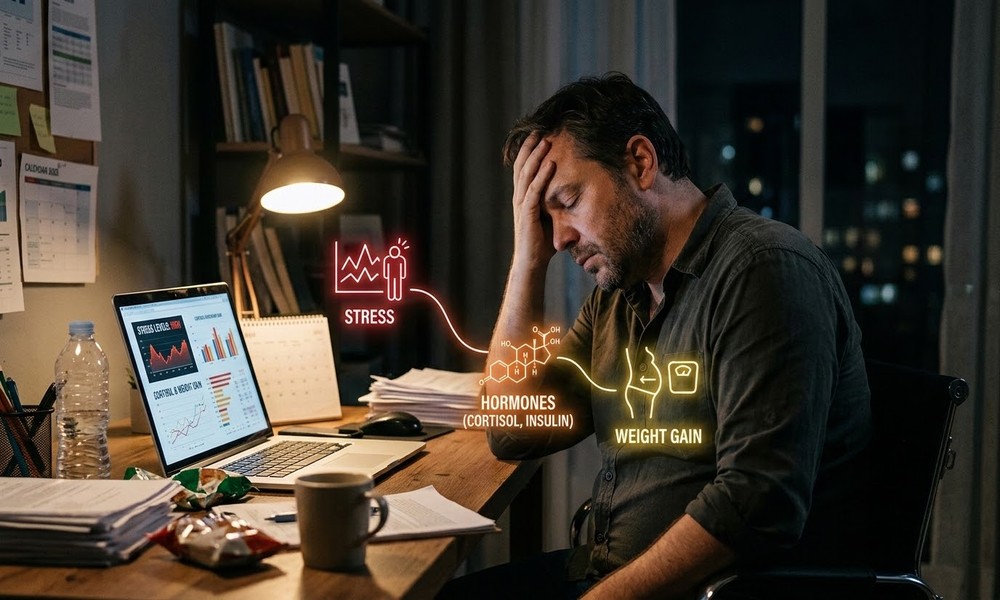
Weight gain in men is often explained in simple terms: eating too much, moving too little, or getting older. While those factors can play a role, they don’t tell the whole story.
Many men deal with fatigue, belly weight gain, poor sleep, low motivation, and mood changes, even when their habits haven’t changed much. When that happens, chronic stress, hormones, and metabolism may be working together in ways that are easy to miss.
The body doesn’t operate as a set of separate systems. Stress affects sleep. Sleep affects testosterone. Hormones influence appetite, energy, muscle mass, and fat storage. Mental health can shape food choices, activity levels, and daily routines. Over time, these patterns can create a cycle that makes weight gain harder to manage and fatigue harder to shake.
Understanding this connection doesn’t mean every problem has one cause. It simply means men may benefit from looking beyond calories alone and considering how stress, hormone balance, mood, and metabolic health interact.
Why Chronic Stress Changes the Body
Stress is a normal biological response. In short bursts, it can help the body stay alert and respond to challenges. The problem starts when stress becomes constant.
Work pressure, financial concerns, relationship strain, poor sleep, caregiving responsibilities, and health worries can keep the body in a prolonged state of tension. When that happens, the body may release higher levels of stress hormones such as cortisol.
Cortisol helps regulate blood sugar, inflammation, and energy use. But when cortisol stays elevated for long periods, it can affect appetite, fat storage, sleep quality, and mood. Many men notice they feel wired at night, tired during the day, and more likely to crave quick, calorie-dense foods.
Chronic stress can also make consistency harder. A man under constant pressure may skip workouts, eat late, drink more alcohol, or rely on takeout because he has little energy left. These habits aren’t always a lack of discipline. Often, they’re signs of a nervous system that’s been running on overload for too long.
Cortisol and Belly Weight Gain
One of the clearest links between stress and weight gain involves abdominal fat. Cortisol can influence where the body stores fat, and prolonged stress is often associated with increased fat around the midsection.
This type of weight gain can be especially frustrating because it may happen gradually, even without major changes in diet.
Stress can also increase hunger and make certain foods more appealing. Foods high in sugar, fat, and refined carbohydrates may temporarily calm stress signals in the brain. That short-term relief can turn into a repeating pattern, especially during long workdays or emotionally draining periods.
Hormone evaluation may be helpful when fatigue, low libido, reduced muscle mass, and stubborn weight gain appear together. EveresT Men’s Health, a provider focused on low T treatment and men’s wellness, reflects how testosterone and broader men’s health concerns are often evaluated together. This type of assessment may help identify whether symptoms are connected to hormone imbalance, lifestyle strain, sleep disruption, or a mix of factors.
Testosterone’s Role in Energy, Muscle, and Metabolism
Testosterone is commonly associated with sex drive, but its role is much broader. It also affects muscle mass, energy, mood, bone health, fat distribution, and motivation.
When testosterone levels are low, some men may feel tired, weaker than usual, more irritable, or less interested in exercise. Muscle mass matters because muscle tissue uses energy even at rest. When testosterone declines, or when stress and poor sleep make workouts less consistent, men may gradually lose muscle.
Less muscle can mean a slower resting metabolic rate, which may make weight gain easier and weight loss more difficult.
Low testosterone isn’t always the main cause of weight gain. Symptoms can overlap with depression, anxiety, sleep apnea, thyroid problems, medication side effects, or poor nutrition. That’s why a complete evaluation matters. Guessing based on symptoms alone can lead to missed causes or unnecessary treatment.
The Mental Health Connection
Stress isn’t only physical. Anxiety, depression, burnout, and chronic worry can all affect how the body functions.
A man dealing with persistent anxiety may have trouble sleeping, relaxing, or recovering after work. A man with depression may struggle with low energy, increased appetite, reduced activity, or loss of interest in healthy routines.
Mental health also affects decision-making. When the brain is overwhelmed, it often looks for fast relief. That might mean eating late at night, skipping exercise, scrolling instead of sleeping, or using alcohol to unwind. These patterns can feel manageable at first, but over months or years, they may contribute to weight gain and fatigue.
Professional mental health care can be part of the solution when stress, anxiety, or mood symptoms interfere with daily life. Understanding how a psychiatrist can help is useful because psychiatric care looks at the bigger picture: sleep, mood, anxiety, stress patterns, medication effects, substance use, and other factors that may affect energy and weight.
When appropriate, a psychiatrist may provide a diagnosis, coordinate therapy, recommend medication, and offer practical guidance that supports both mental and physical health.
Sleep Loss Disrupts Hormones and Hunger Signals
Sleep is one of the most important links between stress, hormones, and weight. Chronic stress often makes sleep lighter, shorter, or more fragmented. Poor sleep can then raise stress levels the next day, creating a loop that’s hard to break.
Lack of sleep affects hormones that regulate hunger and fullness. It may increase appetite, reduce impulse control, and make high-calorie foods more appealing. Men who sleep poorly may also feel too tired to exercise, even when they want to be active. Over time, this can lead to less muscle, more fat, and lower energy.
Sleep also plays a role in testosterone production. Testosterone levels are often connected to sleep quality and duration. Men who consistently sleep too little may notice lower energy, reduced libido, poor workout recovery, and mood changes. Improving sleep isn’t always a complete fix, but it’s often a powerful starting point.
Anxiety, Depression, and Physical Symptoms
Anxiety and depression can show up differently in men than many people expect. Instead of openly describing sadness or fear, some men report irritability, fatigue, headaches, digestive problems, poor concentration, or loss of motivation. Others push through symptoms until their body starts showing signs of strain.
These conditions can also affect weight in different ways. Some men lose their appetite. Others eat more, especially in the evening. Some become restless and tense, while others become less active because even basic tasks feel exhausting. There’s no single pattern, which is why personalized assessment matters.
Bristol Health, which provides psychiatric treatment for anxiety and depression, is one example of a healthcare setting where men may seek support for mood and stress-related conditions. Addressing anxiety or depression may improve more than emotional well-being. It can also support sleep, energy, appetite regulation, and the ability to maintain healthier routines.
Metabolic Changes That Make Weight Harder to Lose
Metabolism isn’t just how fast the body burns calories. It includes blood sugar regulation, insulin sensitivity, muscle mass, hormone signals, digestion, inflammation, and energy use. Chronic stress can influence many of these systems at once.
Insulin is especially important. When the body becomes less sensitive to insulin, it has a harder time moving glucose from the bloodstream into cells. This can contribute to increased hunger, energy crashes, and fat storage. Stress, poor sleep, inactivity, and weight gain can all worsen insulin resistance, creating another cycle that affects energy and body weight.
Age can add another layer. As men get older, muscle mass may decline, recovery may take longer, and hormone levels may shift. These changes don’t make weight gain inevitable, but they can make old habits less effective.
A routine that worked at age 30 may not work the same way at 45 or 55, especially during periods of chronic stress.
Why Weight Gain Often Needs a Multi-Factor Approach
Because stress-related weight gain can have many causes, a single solution rarely works for everyone. Eating less and exercising more may help some men, but others may also need to address sleep, medications, low testosterone, anxiety, depression, alcohol use, insulin resistance, or underlying medical issues.
A more complete approach may include nutrition changes, strength training, stress management, sleep improvement, medical evaluation, and mental health support. The goal isn’t perfection. It’s to reduce the pressures that keep the body stuck in a cycle of fatigue, cravings, low motivation, and fat storage.
Medical weight loss programs can be useful for men who need structured support, especially when weight gain is connected to metabolic concerns or long-term health risks. PhySlim, a provider associated with medical weight loss programs, reflects the kind of service category that may help patients approach weight management through assessment, planning, and clinical guidance instead of relying on willpower alone.
Practical Steps Men Can Start With
The first step is paying attention to patterns. When did the weight gain begin? Did it follow a stressful life event, a new job, poor sleep, an injury, a medication change, or a mood shift? Are cravings worse at night? Is fatigue constant, or does it show up at certain times of day?
These details can help identify what may be driving the problem.
Strength training is often helpful because it supports muscle mass, metabolism, insulin sensitivity, and confidence. It doesn’t have to be extreme. Two or three consistent sessions per week can be more useful than an intense routine that’s impossible to maintain. Walking, especially after meals, can also help regulate blood sugar and reduce stress.
Nutrition changes work best when they’re realistic. Prioritizing protein, fiber, whole foods, and regular meals can reduce cravings and energy crashes. Reducing alcohol, late-night snacking, and highly processed foods may also improve sleep and weight control.
Men who feel stuck despite consistent effort should consider a medical evaluation rather than assuming they’re simply failing.
Conclusion
Stress, hormones, and metabolism are deeply connected. Chronic stress can raise cortisol, disrupt sleep, increase cravings, lower motivation, and contribute to belly weight gain. Hormone changes, including low testosterone, may affect energy, muscle, mood, and fat distribution. Anxiety and depression can further complicate the picture by changing appetite, activity, and daily routines.
For many men, weight gain and fatigue aren’t just lifestyle issues. They may be signs that the body is under strain from several directions at once. Looking at the full picture can lead to better questions, better support, and more sustainable progress.
A balanced approach includes sleep, nutrition, movement, stress management, mental health care, and appropriate medical evaluation. When men understand how these systems interact, they’re better equipped to address the root causes instead of fighting symptoms one at a time.
